Earn To Die

Earn To Die « scary-horrorgame.com1
5.00
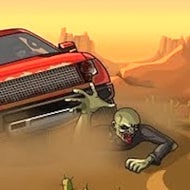
You’ve got the Stock Fire Truck lined up at the start of another day, and the fuel gauge is already telling you this run won’t go far unless you spend smarter than last time. That’s the loop Earn to Die runs on: drive, crash, earn a little cash, go back to the garage, and try again with something slightly less pathetic under the hood.
| Genre | Driving / Zombie Survival |
| Platforms | Browser, Mobile |
| Levels | 40+ across 4 environments |
| Core Mechanic | Drive as far as possible, earn cash, upgrade the vehicle to go farther next attempt |
The Garage Economy Behind Earn to Die
Every attempt in Earn to Die is called a “day” by the community, and that word choice matters because it reframes failure as routine. You’re not losing a life, you’re just ending a shift. Whatever distance you covered and whatever zombies you flattened along the way gets converted into cash the moment you return to the garage, and that cash goes straight into engine, armor, weapon, or fuel tank slots.
The tension is always the same: do you dump everything into one upgrade category, or spread it thin? Early on, engine and fuel tank upgrades pay off fastest because speed and range are what actually move you past the checkpoint. Armor feels tempting but doesn’t matter much until the zombie density picks up in later stretches.
Completionist players tend to grind earlier levels repeatedly just to bankroll a fully upgraded Fire Truck before ever touching Story Mode’s later stages, which is a legitimate strategy even though it’s slower up front.
Reading the Terrain Before You Floor It
Ramps aren’t decoration. They’re the single biggest tool for avoiding collision damage, because a well-timed launch clears whole clusters of debris and zombies that would otherwise chew through your fuel and armor pool. The physics reward controlled acceleration into a ramp rather than a flat-out sprint, since flipping mid-air kills your run just as fast as running dry.
Beginners consistently misjudge this. They either hit ramps too slow and land short, or too fast and flip on landing.
Once you internalize the rhythm, hills stop being obstacles and start being tools. By the time you reach the military base stretch, terrain reading becomes the difference between a checkpoint clear and a stall two hundred meters short.
Zombie Behavior and When Momentum Fails
Zombies in Earn to Die start slow and scattered, more scenery than threat. That changes fast. They begin clustering, clinging to the sides of your vehicle, and dragging down your speed if you let momentum drop for even a second. The fix players learn quickly is to slam the vehicle downward or accelerate hard the moment anything latches on, since standing still is a death sentence for the run.
Speedrunners treat every zombie cluster as a math problem: is punching through worth the fuel cost, or is swerving cheaper? That calculation shifts constantly as the vehicle roster changes.
Later environments introduce larger, tougher zombies that shrug off a stock bumper entirely, which is exactly why weapon upgrades stop being optional past the midpoint of Story Mode.
Vehicle Tiers From Fire Truck to Tank
You start Earn to Die with the Fire Truck, a vehicle that’s forgiving to drive but weak on the weight-to-power ratio that later hills punish. Once you’ve squeezed everything out of it, the Muscle Car becomes available, offering better acceleration at the cost of ground clearance. The Ambulance leans into durability, and the Pickup splits the difference between the two.
The Tank sits at the far end of the roster, slow but nearly impossible to stop once it’s rolling, and reaching it is treated as a milestone in community discussions about the game.
Casual players who only dabble in a level or two rarely see the Tank in action, which is part of why screenshots of it circulate so often in forum threads about Earn to Die.
Fuel, Armor, and the Real Cost of a Day
Fuel management is the quiet killer of most early runs. It’s not the zombies that end you, it’s watching the gauge hit empty three hundred meters from a checkpoint you could have reached with one more fuel tank upgrade. Armor, meanwhile, is a slower bleed. Collision damage stacks even from minor obstacle scrapes, and ignoring it means a vehicle that looks powerful on paper but disintegrates the moment zombies start clustering.
The honest criticism players raise about Earn to Die is that terrain across levels can feel repetitive, with similar obstacle patterns recycled across stretches.
That repetition is real, but it’s also part of why the upgrade loop stays legible. You always know exactly what’s punishing you.
Advanced Runs Once You Reach the Hell Stretch
Here the game stops being forgiving. Zombie density spikes, terrain gets steeper, and a half-upgraded vehicle simply won’t reach the checkpoint no matter how skillfully you drive. Players who push into this stretch usually arrive with a fully armored Ambulance or a weaponized Pickup, because raw speed alone stops being enough once zombie clusters start blocking entire lanes.
Boosting into a cluster works, but only if you’ve timed the approach so the boost carries you clear on the other side rather than stalling you mid-pack.
This is also where weapon upgrades earn their keep, since mounted guns and saw blades can clear a path your bumper alone never could.
- Prioritize engine and fuel tank upgrades before armor in the early game
- Use ramps deliberately rather than treating them as scenery
- Slam or accelerate the moment zombies cling to the vehicle
- Save toward the next vehicle tier instead of over-investing in a dying one
How do you stop flipping on ramps in Earn to Die?
Flipping usually comes from hitting a ramp at excessive speed with an under-upgraded suspension. Ease off the accelerator slightly on approach, and prioritize handling-related upgrades on your current vehicle before attempting later, steeper ramp sequences.
What’s the best upgrade order early in Earn to Die?
Engine first, fuel tank second. Speed gets you through zombie clusters before they can cling on, and extra fuel means fewer stalls just short of a checkpoint. Armor and weapons matter more once you’re facing denser packs in the military base and hell stretches.
How many levels does Earn to Die have?
Story Mode spans more than 40 levels across four distinct environments, moving from open desert roads through city wreckage into a military base and finally into the hell stretch, with difficulty and zombie density climbing at each transition.
Whatever vehicle you’re driving when you finally see the Tank waiting in the garage, Earn to Die rewards the same thing it always has: patience with the upgrade screen and respect for momentum. The Fire Truck you started with will feel like a toy by then, and that’s exactly the point.